Reconstructed
This stool began as a reflection on who we are. On how, as individuals, we rarely stand alone. We need community to exist, to rebuild, to stay balanced.
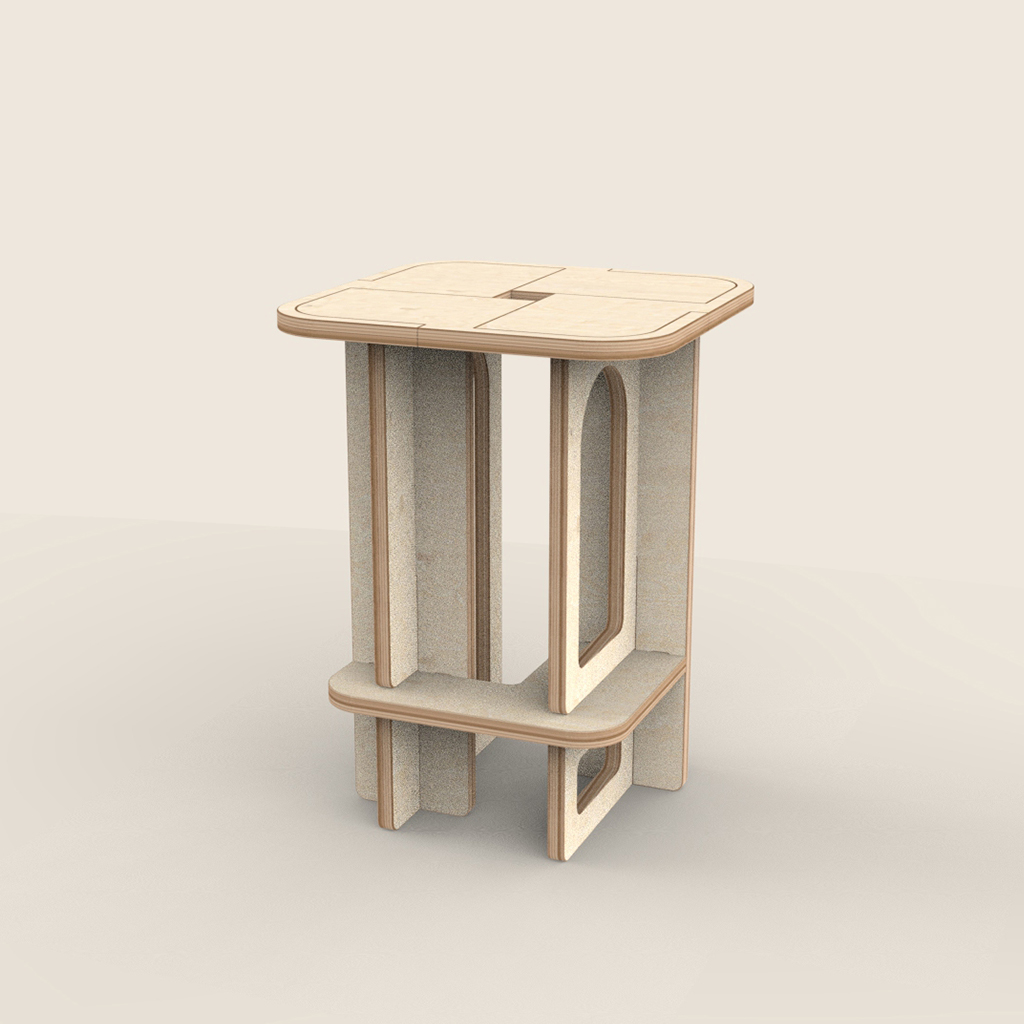
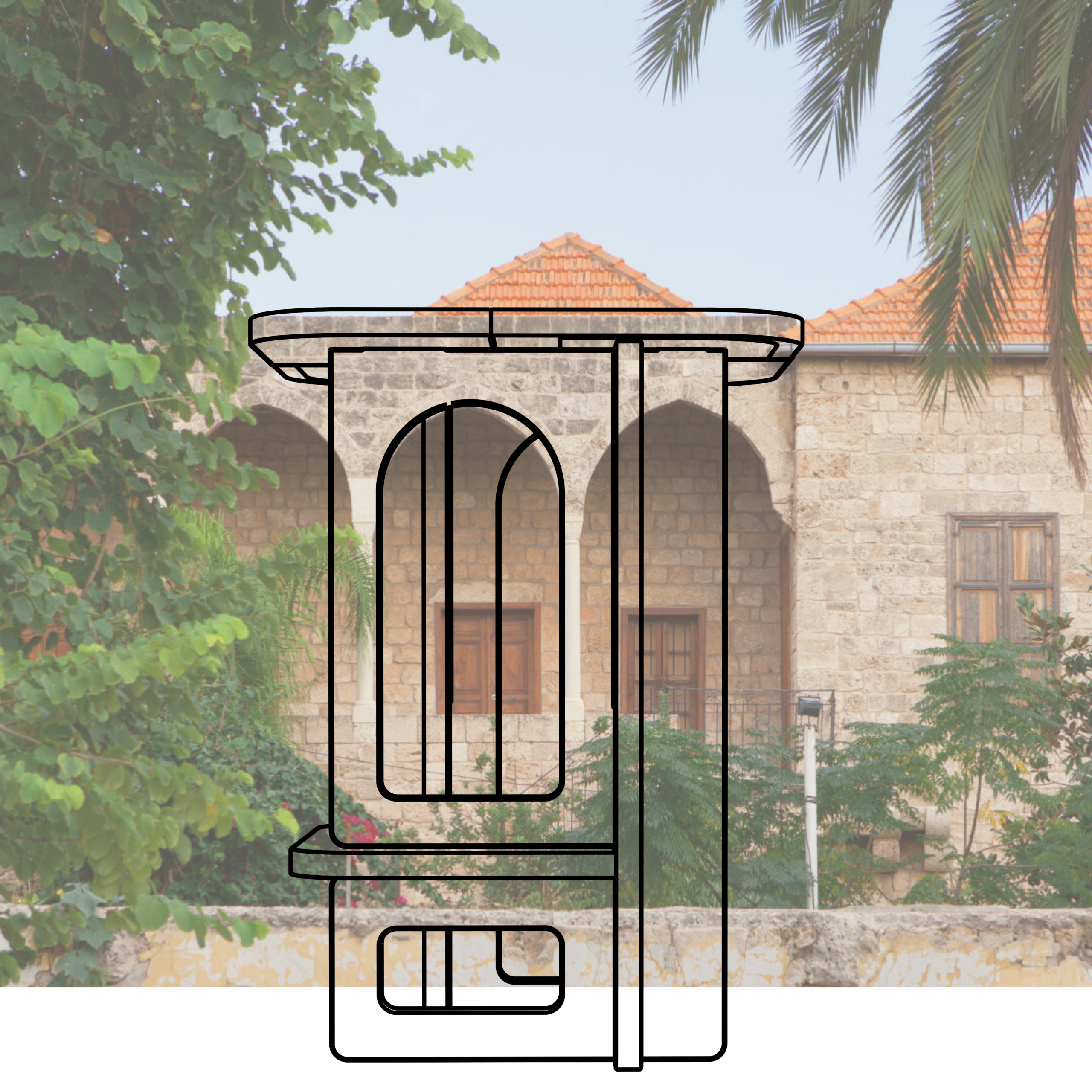
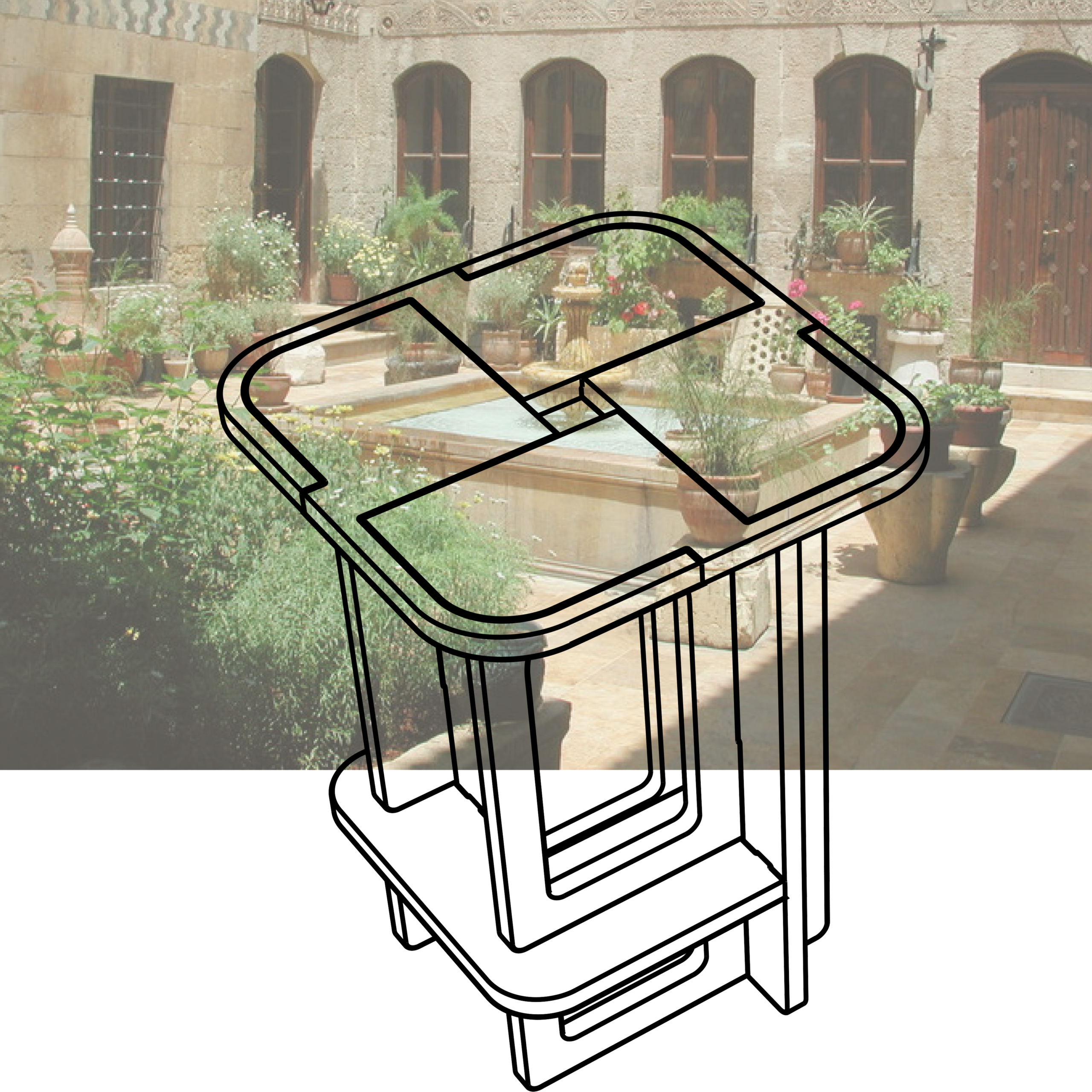
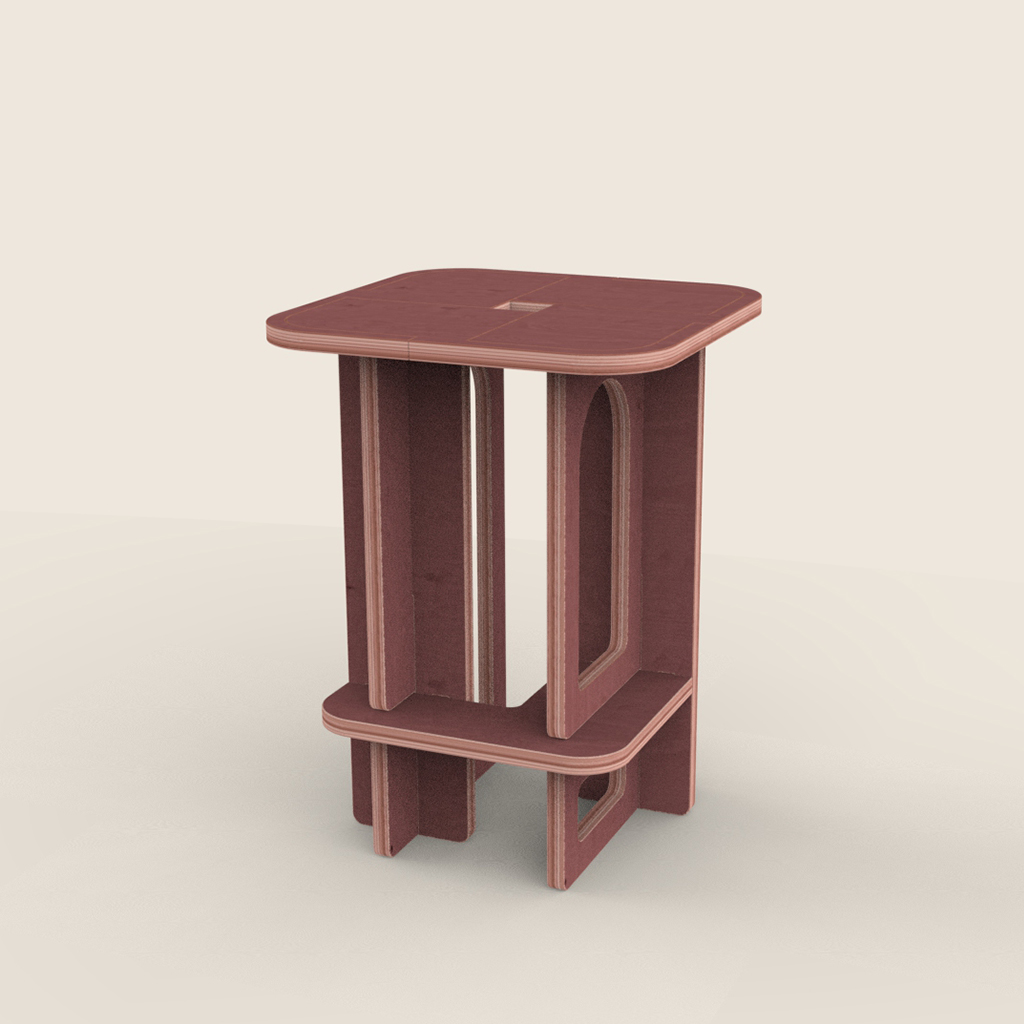
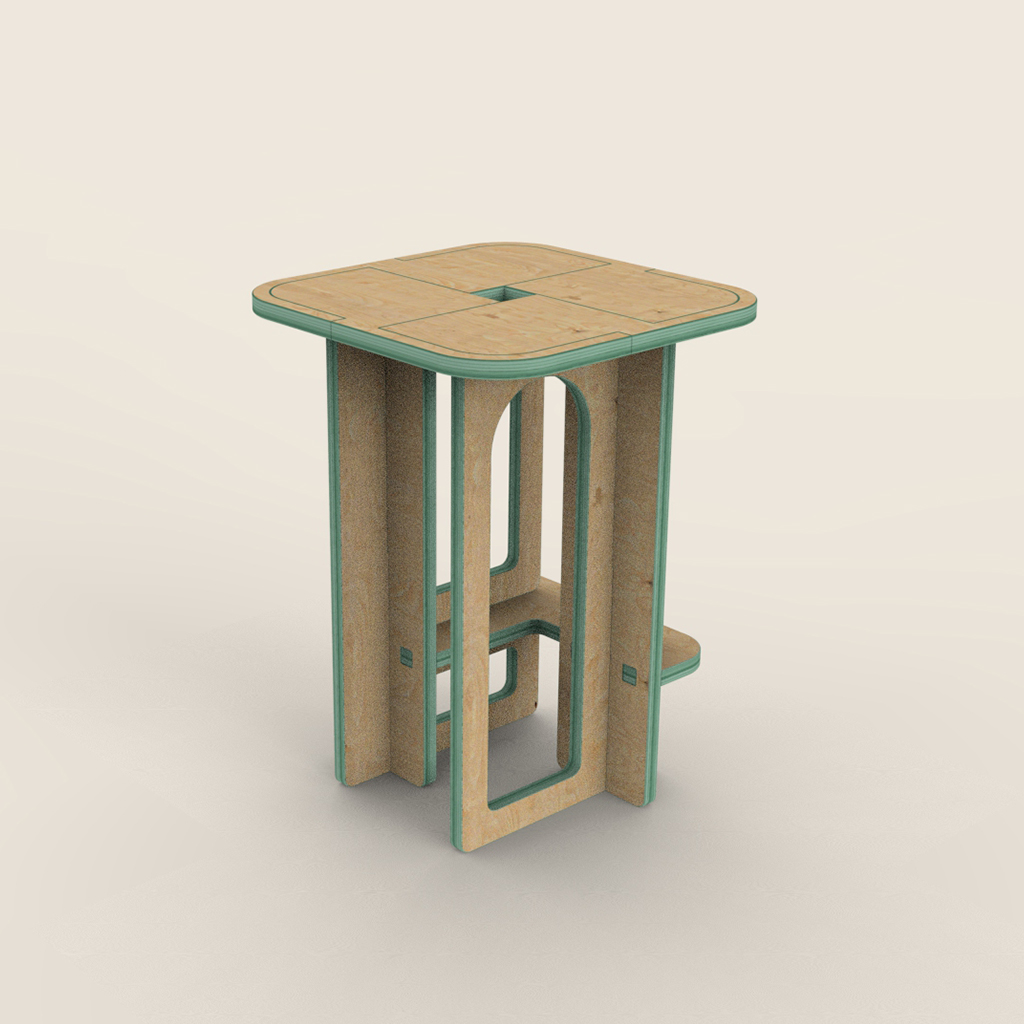
Its seat forms around a central void inspired by the shared courtyards of traditional Lebanese homes, spaces made for gathering, conversation, and everyday life. Like those houses, the structure depends entirely on connection. Each element is incomplete on its own, yet strong when assembled with the others.
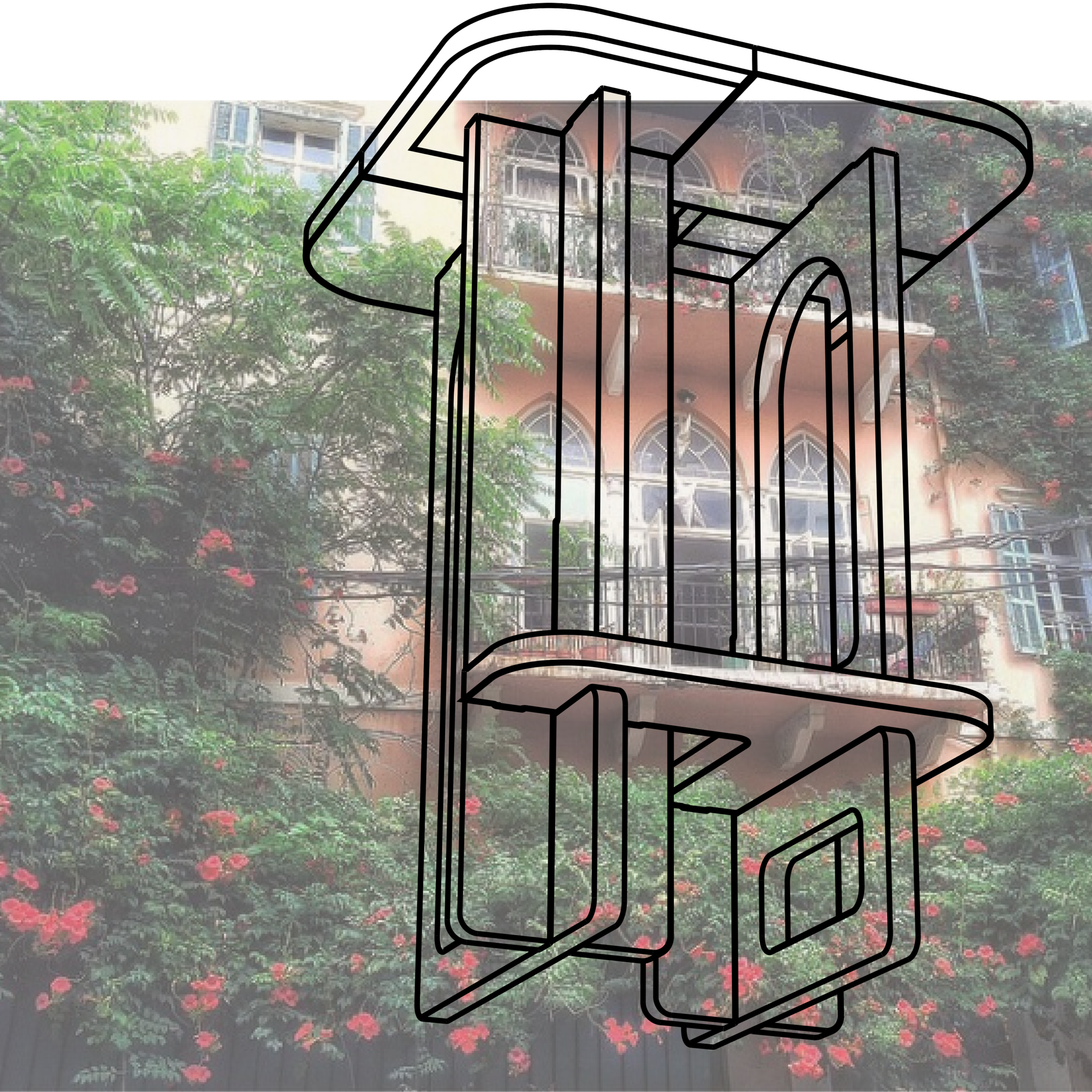
The openings in the legs act like small architectural windows, subtle reminders of our social closeness. We live side by side, aware of one another. We gather, we observe, we exchange stories. Sometimes, we even keep an eye on what the neighbors are doing.
Constructed entirely from flat plywood components and assembled through traditional wood joinery, the stool can be fully disassembled and rebuilt. It is an object sustained by connection, collaboration, and a touch of curiosity.

Assembly
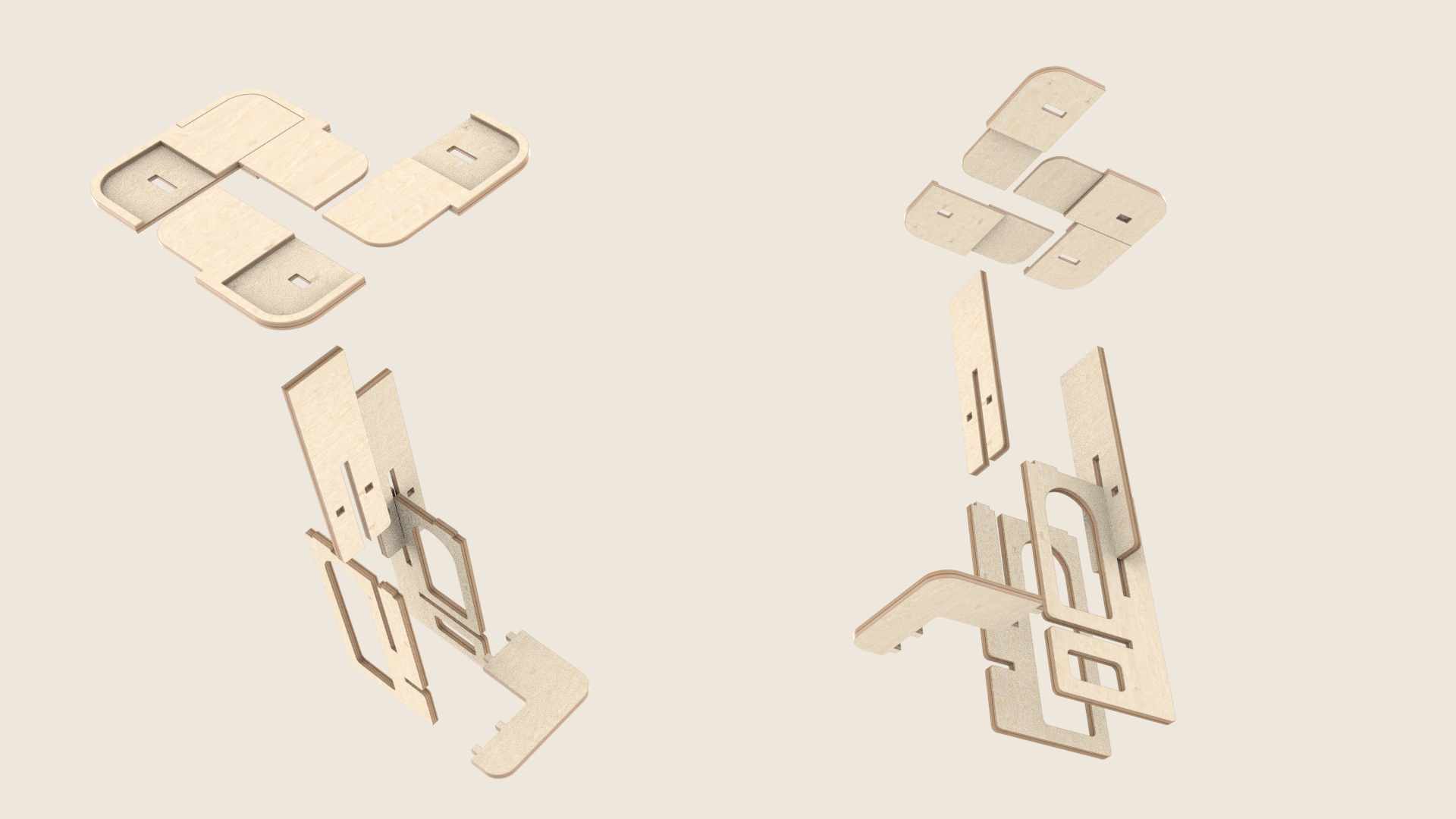
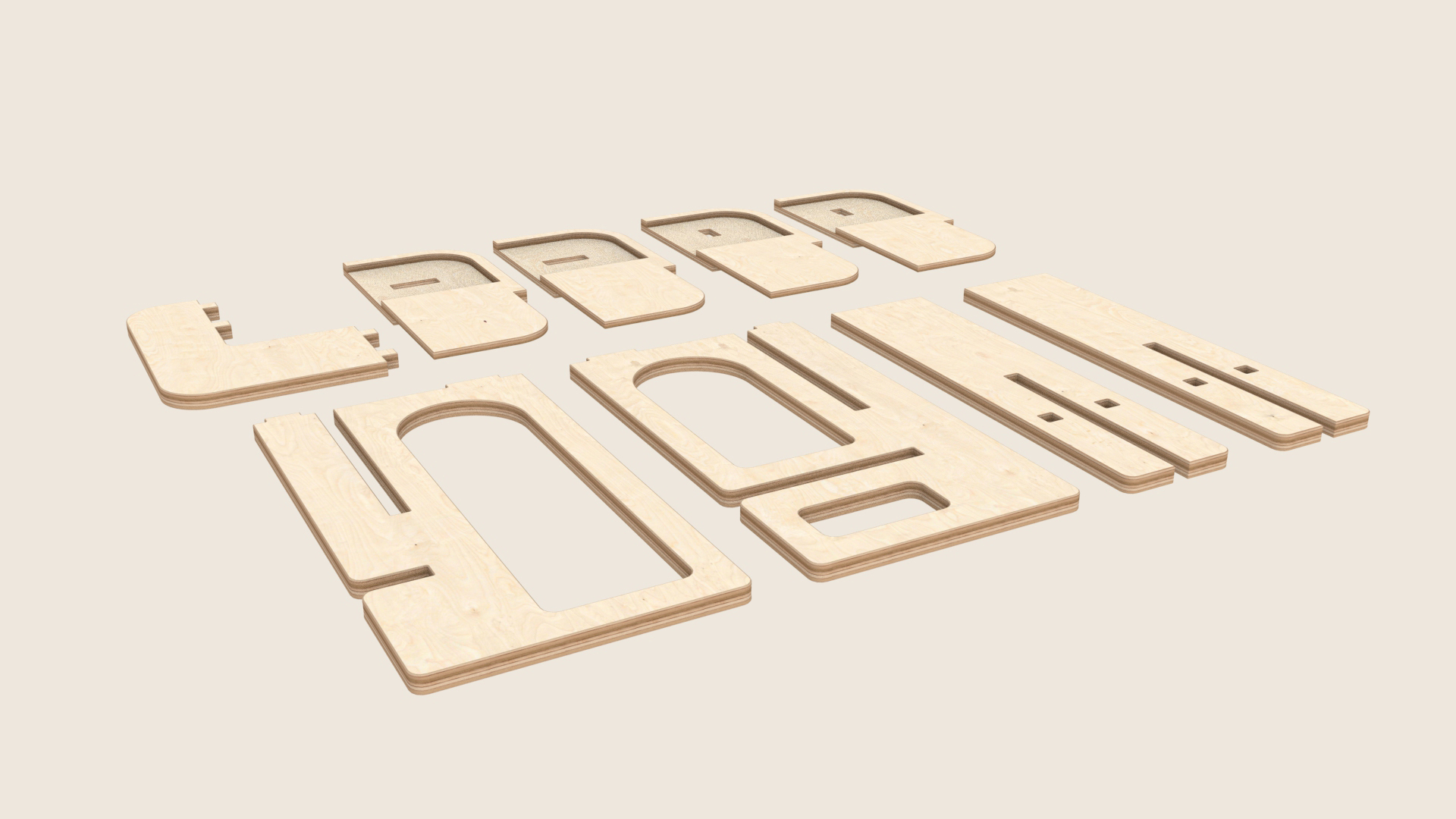
The stool is constructed entirely from flat, two-dimensional components, deliberately limiting the design to planar elements. This constraint allowed for an in-depth exploration of traditional wood joinery and its structural potential.
The seat is composed of four complementary pieces connected through a half-lap joint. Individually, these elements cannot function as a surface. Once interlocked, they form a unified and stable seat organized around a central void.
The legs are assembled using a “mi-bois” joint, chosen for its stability and resistance to lateral movement. The same joint is repeated in the cross element that connects the legs, reinforcing the overall balance of the structure. A variation of the traditional “tenon et mortaise” secures the legs to the seat, completing the structural system.
Materials
Plywood was selected for both practical and expressive reasons.
Structurally, it provides strength, dimensional stability, and precision, making it ideal for interlocking joinery. Its layered composition enhances the clarity of each assembly, visually revealing how the parts connect and overlap.
At the same time, plywood offers a wide range of textures, finishes, and tonal variations. From light birch to darker veneers, it allows the object to shift character while maintaining its structural logic. The material supports both accessibility and adaptability, reinforcing the democratic nature of the stool.